Latest article
Students smiling at a tablet in a cafe

How to Get a Student Credit Card (Step by Step Guide)

Understanding Student Credit Cards: A Guide for College StudentsHaving a credit card during college can be a valuable financial tool, helping you manage expenses and build a positive credit history. Here's an overview of student credit cards, including their…
Read the article

Searches titles and article text across all Financial Tips.

Search all 49 Financial Tips articles by title or text.

Financial Articles

Showing 49 articles — page 3 of 5

Banker handing a customer a stash of money
Financial Tips June 1, 2022

Where Can You Get a Personal Loan in San Francisco?

Discover the Best Personal Loan Options in San Francisco. Explore traditional banks, online lenders, and the advantages of credit unions for personal loans.
Older couple laughing together outdoors
Financial Tips April 28, 2022

Free Retirement Guide

Plan for a secure retirement with our free guide. Explore key insights, tips, and strategies for a worry-free retirement journey.
Two people painting a white wall blue, with this text displayed: Cost Saving Home Improvement Tips
Financial Tips April 28, 2022

Looking to Make Some Home Improvements

Explore home improvement ideas and discover how to enhance your living space while increasing its value.
Young Chinese female with credit card and tablet looking away and thinking about online purchases while sitting at table in street cafeteria in Bay Area
Financial Tips April 26, 2022

Debt Management Plans: Pros and Cons

If you have considerable debt, you’re most likely looking for a solution. Debt management plans can be helpful but there are pros and cons.
a couple sits on their couch
Financial Tips April 26, 2022

3 Benefits of Debt Consolidation

Learn how consolidating your debts can simplify your life and bring you closer to your financial goals.
Woman reviewing paperwork at home
Financial Tips April 19, 2022

Personal Loans vs. Personal Lines of Credit

When you need access to funds, you have a few options. Looking into personal loans vs. personal lines of credit is a great place to start.
Ecar for tips
Financial Tips March 30, 2022

Want to Buy an Electric Car – Read this First

Thinking more seriously about buying an electric car now that gas prices are revving up? You and everybody else.E.V.s are hard to find, especially now. The war in Ukraine hasn’t just caused gas prices to soar. It has also disrupted car production in Europe, which sends exports to the United States. And U.S. companies like Ford “basically got blindsided by how many people want to buy their cars” and can’t make E.V.s fast enough, Chris Harto, a senior policy analyst for Consumer Reports, told me.When my partner and I moved to Los Angeles last year, we knew we would need to shop for a car, and we knew we wanted it to be all-electric.After a lot of research, we managed to test all the cars we wanted to see in a day and drove home that night with our top pick.Here’s what we learned:Plan ahead.Electric cars are in such high demand, few dealers are keeping vehicles around for test drives — we had to drive an hour to find one model. (Oh, and make sure to specify whether you want all-electric, so you aren’t surprised with a hybrid like we were.)We made our appointments the day before. On the day of, we called ahead to make sure the car hadn’t been sold. A car being listed on a dealer’s website is no guarantee it’s on the lot.Be ready to wait, or to pay extra.We saw a handful of cars, but we ended up buying the first we test drove, the Kia Niro.The markup on the Ford Mustang Mach-E, was an eye-popping $15,000. If we had wanted the Volkswagen ID4, all we had to do was wait up to six months, our salesman said. The Chevrolet Bolt has been out of production for months, and a lot of the other models were nowhere to be found, either.But because we didn’t buy the Niro as soon as we saw it, the salesman was unwilling to knock off a $5,000 price increase over the manufacturer’s suggested retail price. C’est la vie, we thought and moved forward anyway.The E.V. credits are confusing.We were dreading redeeming the incentive of up to $7,500 the federal government offers to E.V. buyers. It’s not an instant rebate; you have to wait until tax season.We were prepared to finance the purchase, but the dealer talked us into a lease, which included the full government incentive as a rebate, plus a little extra rebate that covered the lease’s administrative fee. Our contract allows us to buy the car for whatever cost remains at any point during the lease period, plus a $300 fee, so we’ll do that in a few months to avoid the pricey lease charges. We calculated we may come out a few hundred dollars ahead, but the real value was that we got the credit right away.That was a risky move though. Chris Harto, a senior policy analyst for Consumer Reports, told me there could be a lot of gotchas. “I would definitely not do it without very closely scrutinizing all of the paperwork,” he said.California’s Clean Vehicle Rebate Project is confusing, too. First, the program, which offers rebates of $2,000 or more if you buy an all-electric vehicle, is funded and there is no waitlist, despite outdated messages on its website.But the income cap recently changed: If you make more than $135,000 (or $200,000 filing jointly) you do not qualify — something your dealer may not know or tell you. And the cap on the manufacturer’s suggested retail price changed, too, to no more than $45,000 for sedans and $60,000 for S.U.V.s and trucks. That means newly purchased Teslas are not eligible. And those figures could change again.There are other breaks out there, including a $750 credit that California dealers apply at checkout and incentives from electric companies.Forget buying used.We looked. There are exceedingly few used electrics unless you want to buy older models with lower ranges.The Hyundai Kona we test drove was the cheapest late-model used electric we found — and was listed at more than $40,000, thousands over its original suggested retail price. And used cars aren’t eligible for the federal tax credit.Be realistic about your savings.Gas isn’t cheap, but neither is electricity.At about 18 cents per kilowatt-hour, it will cost about $11.50 to fully charge our car’s 64 kWh battery. That’s a lot better than the $70 it costs to fill our Subaru Forester to get about the same distance. But factoring in the cost of the car, particularly with the markup, we may not really be saving much money over a conventional vehicle.That isn’t the only reason to buy electric, which we were reminded of during a particularly smoggy day last week. And we expect to save on maintenance: no oil changes or spark plugs.Compare the price per mile when using gas and electricity. The Department of Energy also has a good calculator that shows you the lifetime cost of various cars.An alternative: Hybrids are in a lot less demand than full electrics. They’re also a lot cheaper; you can save as much as $10,000 to $15,000 at the dealer. Depending on your driving habits, you may still save a lot on gas.In the end, we were happy we had been able to make it all happen in just one day. And as we drove the new car into our neighborhood, we were vindicated further: The price of gas on the corner had ticked up another 10 cents.By William P. DavisPublished in the New York Times on March 23, 2022

A stacked of sandwiches on a plate
Financial Tips February 28, 2022

Financial Tips for the Sandwich Generation

If you find yourself squeezed between caring for your children and caring for your aging parents, you’re part of what’s now referred to as the Sandwich Generation. It’s a scenario faced by nearly half (47%) of adults now in their 40s and 50s, according to a Pew Research Center study, and it can be a recipe for financial disaster. Here are some things you can do to help keep your finances on track while meeting your family responsibilities.Prioritize Your Own Financial SituationAs key support for others, it’s important that you stay healthy physically, mentally, and financially. So, be sure that you don’t short-change your own financial goals—especially saving for your retirement. It’s also really important to have a solid emergency fund of at least 3-6 months of living expenses, maybe more since your obligations are greater and you’re entering a stage in your own life when it’s not unusual for health concerns to arise that can affect your ability to work.Get a Handle on Your Parents’ FinancesTalking about money with the folks can be awkward, but you’ll be in a much better position to help if you have a thorough understanding of their financial picture. This includes checking and savings accounts, but also things like insurance policies, pensions, and assets such as a home. If they own their home or have significant equity, selling it could go a long way toward paying for their care needs if they have little retirement savings of their own.Divide Responsibilities Among SiblingsIf you’re an only child, you may be stuck shouldering the entire load. But if you have brothers and sisters, be sure that each is doing what they can to help your parents. If, for example, one sibling is not able to lend financial support, perhaps he or she can take the lead on caregiving or dealing with parents’ medical issues. Or, siblings who live too far away to participate in caregiving can be asked to contribute financial support.Explore Student AidAlways remember that your children can get loans for college, but you can’t borrow for your retirement. So, even if you’re relatively affluent, be sure to explore all options for student aid, including grants, loans, and scholarships. Having children pay at least part of their college costs also ensures they have some skin in the game.Don’t Forget the Tax BenefitsIf you become financially responsible for your parents, you may be able to claim them, as well as your children, as dependents on your tax returns. If you are paying for their medical care, those costs may also be deductible since they are dependents. Also consider looking into the Dependent Care Credit, which is available to those who pay for childcare or eldercare while working.Get Estate Documents in OrderWills and advance healthcare directives are musts for both you and your parents, but it’s also a good idea to have a financial power of attorney prepared so you are able to step in and handle financial matters on their behalf. While these issues are always difficult to discuss, it will make things easier on everyone in the family if your parents also make clear in advance their wishes regarding final arrangements when they pass away.
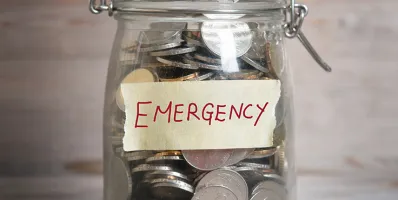
Coins in glass money jar with emergency label, financial concept. Vintage wooden background with dramatic light.
Financial Tips January 26, 2022

How to Plan for Financial Emergencies

Wouldn’t it be nice to adapt to change easily and gracefully? To offset the wallet shock an unexpected life change can bring? You can.Whether you have one year or one week to adjust to such monetary upheavals as marriage, divorce, a growing family, or military deployment, you can sail through financial foul weather – as long as you PLAN for it.Prepare: This first step will help you understand how much money you have to work with. It is vital to putting together a practical strategy for the future. If you don’t already have your financial documents in one place, it may require a little hunting and gathering (and once you do, keep them accessible, be it on your computer or in a folder in a corner of the kitchen. Be and remain organized for the next inevitable change).You will need recent bank and credit card statements for account balances, current loan papers, pay stubs with income, tax, and deduction information, and your checkbook register for household bill information.Have it all together? Good. Now carefully examine and notate your current income, expenses, assets and liabilities. You will need all this data for the next step in your PLAN…Learn: Ignorance is not bliss! Learn how this event will alter the way you currently spend and save. If there will be additional or increased expenses, you will need to be acutely aware of their type and cost. More gas for a longer commute? Diapers or daycare for a baby? The last thing you want is to be hit with a big, unexpected expenditure after you worked out a feasible money management plan.To know how the change will affect the numbers in your financial picture, you may need to conduct some research. Thankfully, there is an abundance of free to cheap (yet high-quality) information available. Websites, books, magazines, friends and family members who have experienced what you are about to go through are all useful sources to tap. Contact your financial institution for ideas and options. If you are in the military and are facing deployment, be sure to investigate the plethora of programs that are specific to your needs and situation.Often a life change will inspire new goals. You may want to start an educational IRA to fund your child’s college tuition, or save for a down payment on a home. Take the time to assess long-term objectives and figure out how much it will take to achieve them. They too will have to be factored in to your newfangled budget.Act: Now you need to put your PLAN into action. Because you have completed the first two steps, you should have everything necessary to smoothly transition from old to new. Plug the revised numbers into your budget. Are you over or under? You may have to modify spending habits, reduce expenses, or even sell assets to meet the needs of the pending change in circumstance.Other action items may include opening a savings or investment account, adjusting tax deductions or exemptions, obtaining or modifying insurance coverage, or meeting with a financial professional for long-term planning.Resist inertia – sitting around hoping things get done is tempting but self-destructive. All the knowledge and assistance in the world won’t help if you don’t do what you need to do.Network: Finally, reach out and connect with those who are, or have been, in the same position as you will be. The impending financial predicament may be new to you, but there are scores of people out there who have weathered the storm and come out dry. They can provide you with not just information, tools, and ideas, but also the support you need to be successful with even the most challenging of changes.Ask people in your familial and social circle for suggestions and connections, contact your employee assistance program for free programs and services, log onto online forums and chat rooms. You may be surprised by how enthusiastic others are to share their wisdom and encouragement.Remember, change isn’t a matter of if – it’s when and how. Think of it as an opportunity to grow and be self-sufficient under even the most daunting of financial conditions. You can do it. It just takes a good PLAN.
A woman sitting on the floor with a laptop and wrapped presents beside her
Financial Tips April 29, 2021

4 Online Shopping Safety Tips

Online sales on Black Friday hit a new record this year, according to Adobe Analytics. Shoppers spent $6.22 billion online on Black Friday, up from $5.03 billion last year. More than $2 billion in sales were done on smartphones, double the amount from last year.Unfortunately, the high number of digital consumers presents a huge opportunity for cyberthieves.Here are few tips from the Federal Trade Commission and Identity Theft Resource Center on how to protect your digital profile.Do a digital audit: When was the last time you checked to see what personal information is out there? Go ahead, Google yourself. You may be surprised what old social media profiles, emails or other accounts may pop up.Set up alerts: Put that smartphone and connectivity to good use. Set up text and email alerts so you’ll know immediately about any suspicious transactions or activity ranging from password changes to login attempts. It is also recommended to enable two-factor authentication. While it may feel a time-consuming extra step to get a 6-digit code to access or authorize something, experts say it’s worth the added security you’ll receive in return.Update passwords: The general rule is if it’s easy for you to remember then it’s easy for thieves to figure out as well. Experts say the exception to this rule is using a seven to 10-digit phrase and swapping numbers, capital letters and symbols in for letters. The odds are in your favor that it won’t be as easy to hack. While we are talking updates, you should also take the time to do those software, app and operating system updates. Yes, they can be annoying, but you will be saving the headache of your personal data being more vulnerable to thieves.Know where you are shopping: Experts say it’s never been easier to shop on a secure site. Look for the lock symbol, which indicates a site is secure, and do your best to ensure you are on the actual retail site.By Myriam DiGiovanniCourtesy of CUInsight
salesman with car keys
Financial Tips April 29, 2021

Why You Should Finance Your Auto Loan at Your Credit Union

When shopping for a new set of wheels, your first stop should be a credit union. While many people start at the dealer’s lot, you’ll enjoy a lower rate, a simpler loan application, and other big benefits when choosing to finance your car at your credit union.Let’s take a look at the differences in the auto loan process.Financing an auto purchase at a car dealershipAt a dealer’s lot, the dealer will likely try persuading you to push your self-imposed car budget to the max or even to go over your ceiling price. But, if you’re financing your car through the dealer, that’s only the beginning. Once you’ve chosen your car, you’ll need to submit a complicated auto loan application form, which the dealer sends to the finance companies it partners with, which can include lenders and financial institutions. The dealer will then share the lender offers with you and ask you to make your choice.However, in most cases, the dealer is only the middleman. This means they are going to present your options in a way that most benefits them – and not you. Most lenders will pay a larger commission for a car that is sold at a higher price and for a loan that is established at a higher APR. As a result, your dealer will always try to get you to sign up for a loan that is more expensive than what the lender is actually willing to offer you. Even a fantastic offer from a credit union will be presented as higher than it really is, or may not be presented at all.Financing an auto purchase at a credit unionWhen you work with San Francisco Federal, you’ll be dealing with people who know who you are and what your financial reality is like. No one will try to push you into a loan you can’t afford. The process of applying for an auto loan is simple, quick and easy. (You can even apply online or over the phone.) Also, as a member of the San Francisco Federal, you already have a headstart on getting that pre-approval.One of the biggest advantages you’ll have when financing an auto loan through a credit union is a lower APR (Annual Percentage Rate) Because working directly with us, you’ll only hear the actual rate we offer instead of the marked-up rate the car dealer presents to you.Another advantage you’ll enjoy by working with us is a pressure-free setting when determining how much you can afford to pay each month toward your new car. In contrast, when you’re standing in the dealer’s lot surrounded by cars you wish you could afford, you’re more likely to make a decision you’ll later regret.
Bowl of healthy fruits and nuts
Financial Tips April 29, 2021

Food Shopping: The Blindspot in Our Spending Plan

Your relationship with food is probably pretty complex. In addition to sustenance, you may use food for comfort, gathering with others, distraction or pleasure. When you really commit to tracking your food expenses as part of putting together a spending and savings plan, you realize food can be a complicated part of your financial life too. While meals are of course a necessity, take a look at your food-buying habits. Odds are that there’s room to save.Eliminating “extra” expenses like dining out or buying pricey steaks is a good place to start. But also keep in mind that a successful food-purchasing plan isn’t just about cutting things out. It’s also about understanding your habits.Going out to lunch at workYou may grab “a quick bite” at work because it’s easy. But it might actually take you less time at home to put together the same meal. Then you get to spend more of your lunch period at work relaxing, going for a walk or reading a book. Or you could just spend the time thinking about the hundreds of dollars you will save this year by brown-bagging.Convenience store or check-out aisle buysIf you actually look at the prices, you realize that the mark-ups on the quick-grab items near store cash registers are incredibly high. But that’s just the thing. Stores realize you don’t stop to examine and consider prices in those situations. If you find yourself reaching for a pack of gum or some candy as you are about to check out, instead, make a commitment to stock up ahead of time and keep these items in your car or your purse or your desk. By buying them online or at a bulk retailer, you could pocket a bunch of extra dough.Fast foodThe fast burger or taco for $0.99 sounds like the perfect recipe for our modern sensibilities; we want food in a hurry and we don’t want to pay a lot. While the speed of delivery may be enticing, the end price may not be all that great. Consider: how many times have you gone to a fast food restaurant and ordered just one thing? The advertised item may be under a dollar, but when you add on a drink and fries or another side order, the costs add up.Shopping when you are hungryIt’s silly to think that you are always going to shop on a full stomach. So instead of feeling like you need to plan all your grocery shopping excursions in tandem with meals, just be aware of why you are putting each item into your cart. Are you reaching for that plastic canister of candy rope because it’s a part of your spending plan or because your blood sugar is a little low?“High end” grocery storesYou may like to go to the more expensive grocery in your area because they have a few specialty items that you can’t find at other stores. That is certainly understandable. But make sure those items aren’t available for a lower price at your regular grocery first. They may be tucked away in a place you hadn’t thought to look. Also, even though you might go to the more expensive grocery store for a few specialty items, doesn’t mean you have to pay a higher price on the regular items; try to just purchase the specialty items there.Buying prepared itemsAny financial coach worth their salt will tell you that cooking your own meals instead of buying prepared meals saves you mounds of cash. But also think about the fruits and vegetables you buy. Fruit medleys or even individual chopped fruit packages can cost much, much more than just buying the fruit in its whole form. Same goes for salad mixes. Is it really worth the extra money to have someone cut up your fruit or mix up some greens for you?Failing to planIf you are one of those people who wander around the grocery store until they find some things that look yummy, you are probably paying more than the list makers of the world. In a perfect world you would plan out your meals for a couple weeks and create a shopping list based on those meals. But at the very least, try to formulate a list of necessities. Allow yourself one impulse buy if that helps you stick to the plan. Remember that “if you fail to plan, you plan to fail”.Meat-centric mealsIf you plan your dining experience with meat as the centerpiece, you are not alone. It’s a common tactic. But it doesn’t have to be an all-the-time way of looking at meal construction. By sometimes substituting in tofu, beans or legumes as your protein source, you can save significantly at checkout time.Brand name insistenceThere are certain consumer items for which you can make an argument that brand name goods are a better choice. But that isn’t generally the case with food. Lima beans are lima beans, whether the name on the can is the one you heard on TV or it is completely new to you.Making money-smart choices about your food purchases doesn’t have to mean denying yourself the things you love. Instead, think of using these tips to get all the food you like, while giving yourself extra money to spend on things you enjoy.Courtesy of BALANCEPRO

Money tips, monthly.

Budgeting tips and tricks, new rates and offers — in the member e-newsletter.